
Introduction to AI Automation
Running a business today often feels like managing a machine with too many moving parts. Costs increase, expectations grow, and competition moves faster every year. AI automation solutions help businesses simplify operations while reducing unnecessary spending.
Artificial Intelligence allows companies to automate repetitive work, improve decision-making, and increase productivity without constantly increasing payroll expenses. Businesses adopting intelligent automation gain efficiency that directly impacts profitability.
Companies exploring digital transformation often start with solutions available through OrkSync AI Solutions which focus on improving operational efficiency through automation and data intelligence.
Why Businesses Need Cost Optimization
Rising Operational Expenses
Every business faces growing costs — salaries, tools, software subscriptions, marketing spend, and infrastructure expenses. Without optimization, expenses grow faster than revenue.
Cost optimization is no longer optional.
It is survival strategy.
Pressure to Scale Efficiently
Companies want to grow, but growth usually requires more people, more time, and more investment. AI automation breaks this pattern by allowing businesses to scale operations without proportionally increasing costs.
That changes everything.
What Are AI Automation Solutions?
Understanding Intelligent Automation
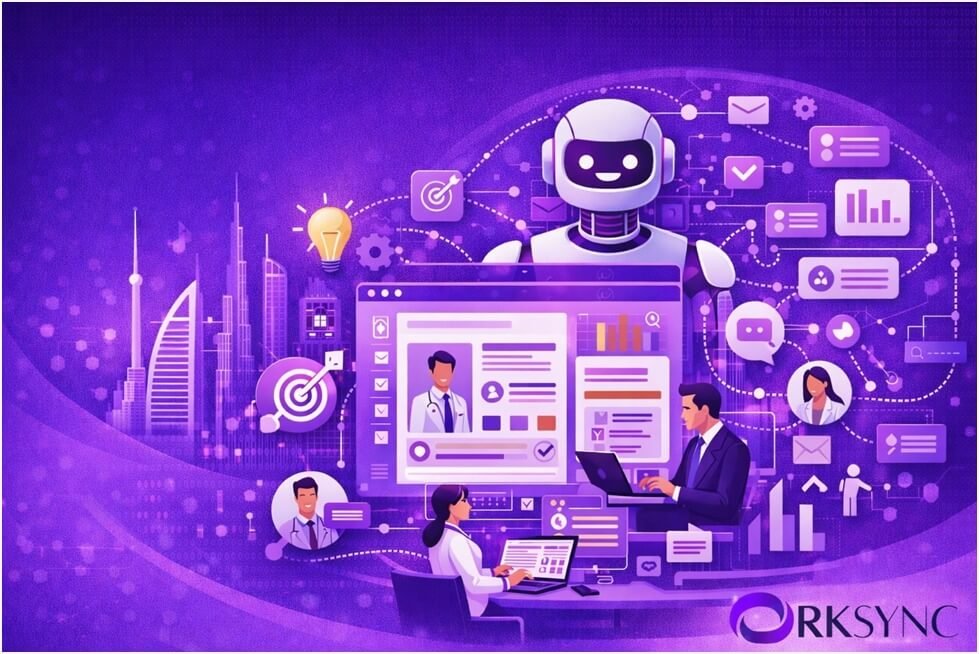
AI automation solutions use intelligent systems to perform tasks that traditionally required human involvement. These tasks include responding to customers, analyzing data, predicting outcomes, and managing workflows.
Unlike traditional automation, AI learns from patterns and continuously improves performance.
Core Technologies Behind AI Automation
Machine Learning
Machine learning enables systems to learn from data and improve accuracy over time. Businesses use machine learning for forecasting, personalization, and decision support.
Natural Language Processing
Natural Language Processing allows machines to understand text and speech. Chatbots and email automation tools rely on NLP to communicate naturally with customers.
Predictive Analytics
Predictive analytics helps businesses anticipate future outcomes by analyzing historical trends. According to IBM AI Insights, predictive intelligence helps organizations improve operational efficiency and make faster decisions using data-driven insights.
Introduction to AI Automation
Running a business today often feels like managing a machine with too many moving parts. Costs increase, expectations grow, and competition moves faster every year. AI automation solutions help businesses simplify operations while reducing unnecessary spending.
Artificial Intelligence allows companies to automate repetitive work, improve decision-making, and increase productivity without constantly increasing payroll expenses. Businesses adopting intelligent automation gain efficiency that directly impacts profitability.
Companies exploring digital transformation often start with solutions available through OrkSync AI Solutions which focus on improving operational efficiency through automation and data intelligence.
Key Ways AI Reduces Business Costs
Eliminating Repetitive Tasks
Many business processes involve repetitive work such as data entry, report creation, and follow-up emails.
AI handles these tasks instantly.
Employees can focus on strategic work instead of routine activities.
Increasing Operational Speed
AI systems process information much faster than humans. Faster processes reduce delays and improve productivity across departments.
Time saved equals money saved.
Reducing Errors
Human errors can be costly, especially in finance, operations, or customer communication. AI follows structured logic, reducing costly mistakes and improving accuracy.
AI Automation in Customer Support
Chatbots for Instant Responses
AI chatbots respond to customer queries instantly without human intervention. Businesses reduce support costs while improving response speed.
Customers get answers faster.
Companies reduce workload.
Ticket Classification Automation
AI automatically categorizes customer tickets and routes them to the right department. This reduces manual effort and improves response efficiency.
AI Automation in Marketing
Smart Email Automation
AI tools personalize email campaigns based on user behavior. Instead of sending generic messages, businesses send targeted communication that improves engagement.
Better targeting means higher return on marketing investment.
AI Content Optimization
AI analyzes content performance and recommends improvements. Businesses produce content that performs better without extensive trial and error.
AI in Sales Process Automation
Lead Qualification
AI identifies high-quality leads based on behavior patterns and engagement signals. Sales teams spend time on prospects most likely to convert.
Conversion rates improve.
Costs decrease.
Predictive Sales Forecasting
AI forecasts sales trends using historical data. Businesses make better decisions about inventory, hiring, and marketing spend.
AI Automation in Finance
Automated Invoice Processing
AI extracts invoice details and processes payments automatically. Finance teams save time and reduce administrative workload.
Expense Monitoring
AI detects unusual spending patterns and highlights cost-saving opportunities. Businesses gain better financial control.
AI in HR Automation
Resume Screening
AI scans resumes and identifies suitable candidates quickly. Recruiters focus on quality hiring rather than manual filtering.
Employee Insights
AI analyzes employee engagement data to identify productivity trends. Businesses address issues proactively.
AI in Operations and Supply Chain
Demand Forecasting
AI predicts product demand using historical patterns. Businesses avoid excess inventory or stock shortages.
Inventory Optimization
Smart inventory management ensures resources are used efficiently without unnecessary storage costs.
Benefits Beyond Cost Savings
Better Decision Making
AI analyzes large amounts of data quickly. Decision-makers receive insights faster and act more confidently.
Business Scalability
AI allows businesses to handle increased workload without significantly increasing operational costs.
Growth becomes sustainable.
Challenges of AI Implementation
Initial Setup Investment
AI tools require initial investment in technology and integration. However, long-term cost savings usually outweigh setup costs.
Data Quality Requirements
AI relies on accurate data. Poor data quality can reduce effectiveness and impact results.
Best Practices for Implementing AI
Identify Automation Opportunities
Businesses should begin by identifying repetitive processes that consume time and resources.
Automation delivers maximum value when applied strategically.
Choose Scalable Tools
Selecting flexible AI solutions ensures long-term adaptability as business needs evolve.
Future of AI Cost Optimization
Hyperautomation Trend
Businesses are combining AI with robotic process automation and analytics tools to create fully automated workflows.
AI-driven Decision Systems
Future organizations will rely on AI for real-time decision support, improving efficiency and reducing operational costs.
Conclusion
AI automation solutions are transforming modern business operations. Instead of continuously increasing budgets, companies are optimizing processes using intelligent systems.
AI reduces manual effort, improves speed, and enhances decision-making accuracy.
Businesses that adopt AI early gain a competitive advantage while maintaining cost efficiency.
The real power of AI lies not in replacing humans, but in empowering them to focus on meaningful work.
Smarter systems create smarter businesses.