Modern businesses run on information. Teams collect data every day. Sales tracks leads and deals. Finance tracks invoices and payments. Operations manages inventory and fulfilment.
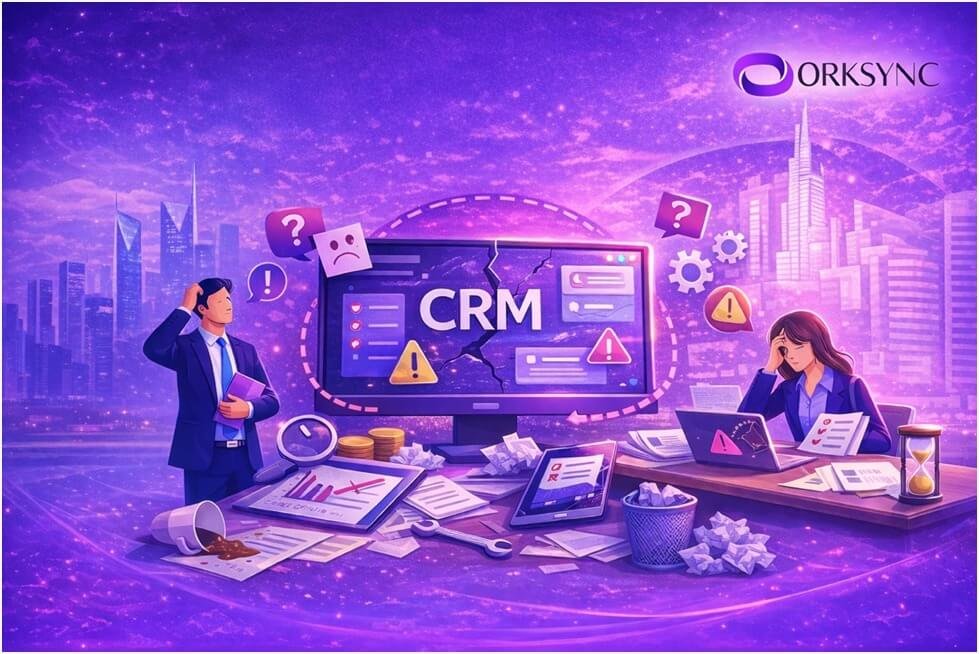
Yet many organisations still store this information in separate systems.
Sales sees pipeline activity.
Finance sees billing records.
Operations sees order fulfilment.
No team sees the entire business.
This separation creates blind spots. Decisions slow down. Teams rely on incomplete information.
Because of this challenge, ERP and CRM integration has become essential for organisations across the UAE and GCC.
A Customer Relationship Management (CRM) system manages customer interactions and sales pipelines. An Enterprise Resource Planning (ERP) system manages finance, procurement, inventory, and operational processes.
What Is ERP and CRM Integration?
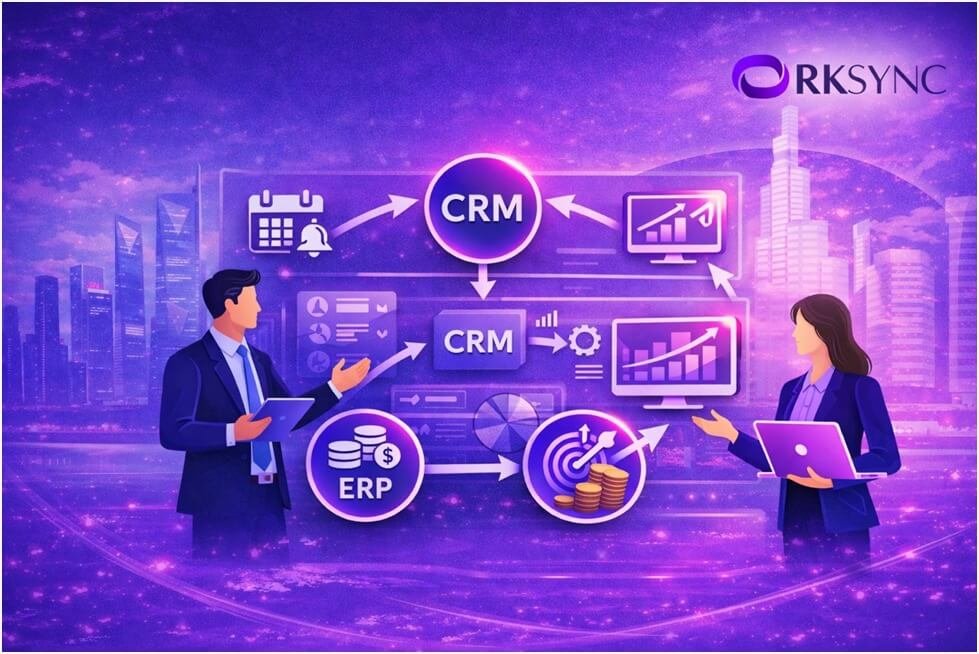
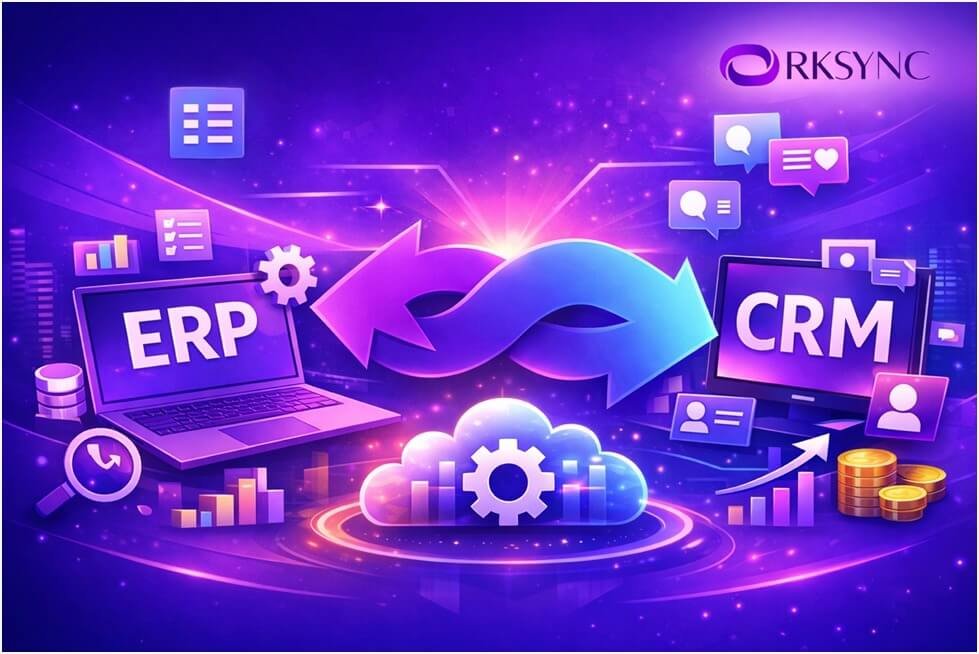
ERP CRM integration connects two core enterprise systems so information flows automatically between them.
CRM manages front-end activity.
ERP manages back-end operations.
CRM handles:
• lead tracking
• opportunity management
• customer communication
ERP manages:
• financial accounting
• inventory tracking
• procurement workflows
When organisations deploy ERP CRM integration software, data moves between departments without manual entry.
A salesperson closes a deal in CRM.
The system instantly creates an order in ERP.
Finance receives invoice data.
Operations receives fulfilment instructions.
Businesses that want connected platforms often explore solutions such as ERP Integration Solutions in UAE
Integration ensures both platforms operate as one coordinated business environment.
Why Do Businesses Need ERP and CRM Integration?
Businesses rely on accurate information to make decisions.
Without enterprise system integration, data becomes fragmented.
Sales teams see one record.
Finance teams see another.
Operations teams see something different.
This fragmentation creates confusion.
Integrated systems solve this problem by creating unified customer data management.
A complete customer profile may include:
• contact information
• purchase history
• invoice status
• support interactions
When all departments access the same information, collaboration improves.
Many organisations implementing CRM integration with ERP in Dubai focus on eliminating data silos and improving operational visibility.
How ERP and CRM Integration Improves Sales Performance
Sales teams close deals faster when they have operational visibility.
Without integration, sales representatives often lack insight into:
• product availability
• delivery timelines
• payment status
This missing information weakens negotiations.
With ERP integration platforms, operational insights appear directly inside the CRM system.
Sales representatives can check inventory before closing a deal.
They can review invoice history during discussions.
Organisations using customer relationship management software in the UAE often see stronger sales performance when operational data becomes accessible.
How Integration Improves Operational Efficiency
Disconnected systems slow organisations.
Manual workflows create delays.
Human error increases.
Teams repeat the same tasks.
Without ERP CRM integration, employees frequently enter identical information across multiple systems.
For example:
- Sales confirms a deal in CRM.
- Finance manually records the order in ERP.
- Warehouse teams receive delayed instructions.
Integration removes these steps.
When a deal closes, the system automatically creates:
• order records
• invoices
• fulfilment requests
Automation increases speed and reduces administrative effort.
How Integration Improves Customer Experience
Customers expect fast answers.
Common questions include:
• Where is my order?
• Has my payment been received?
• When will delivery occur?
Disconnected systems slow responses because employees must contact multiple departments.
With CRM ERP integration solutions, customer data becomes instantly available.
Support teams can see:
• order history
• shipment status
• invoice records
• previous support conversations
Faster access leads to faster responses.
Faster responses build trust.
For organisations implementing ERP solution in UAE, this visibility becomes a strong competitive advantage.
How ERP and CRM Integration Supports Business Forecasting
Forecasting requires two types of data.
Sales activity.
Operational capacity.
CRM systems track pipeline demand and customer behaviour.
ERP systems track inventory levels, production capacity, and financial performance.
When organisations connect these systems, forecasting becomes more accurate.
Leadership teams can compare:
• pipeline demand vs inventory availability
• projected orders vs operational capacity
• expected revenue vs financial targets
This alignment improves strategic planning.
Does ERP and CRM Integration Reduce Manual Work?
Yes.
Integration significantly reduces repetitive tasks.
Disconnected systems often require:
• manual data entry
• spreadsheet reconciliation
• duplicate reporting
Integrated CRM automation systems remove many of these tasks.
Information synchronises automatically across departments.
Sales updates appear inside ERP.
Finance updates appear inside CRM.
Automation improves productivity and lowers operational costs.
What Challenges Do Businesses Face During Integration?
ERP and CRM integration projects often encounter obstacles.
Common challenges include:
• inconsistent data structures
• duplicate customer records
• unclear system ownership
• low user adoption
These issues highlight the need for a structured enterprise integration strategy.
Businesses often partner with experienced implementation specialists to design scalable system architectures aligned with real operational workflows.
How Businesses Successfully Implement ERP and CRM Integration
Successful integration begins with process mapping.
Organisations must first define the complete business lifecycle:
Lead → Opportunity → Quote → Order → Invoice → Delivery → Service
This lifecycle determines how data moves between systems.
Companies must also define system ownership.
CRM manages:
• Customer relationships
• Sales pipelines
• Customer communication
ERP manages:
• financial transactions
• inventory
• procurement
• fulfilment operations
Clear system ownership ensures clean data flow.
Businesses evaluating integrated enterprise platforms often explore scalable solutions through OrkSync Enterprise Platform
These systems align customer intelligence with operational processes.
Can ERP and CRM Integration Support Business Growth?
Integration becomes more valuable as companies grow.
Expanding organisations operate across multiple teams, markets, and locations.
Disconnected systems struggle to support this complexity.
Integrated enterprise platforms enable:
• consistent data governance
• cross-department collaboration
• multi-location visibility
• scalable transaction processing
These capabilities allow organisations to grow while maintaining operational control.
Conclusion
CRM and ERP systems serve different purposes.
CRM manages customer relationships and sales activity.
ERP manages finance, procurement, inventory, and operations.
When businesses implement ERP and CRM integration, they connect customer insight with operational execution.
The result is a unified business environment that delivers:
• improved organisational visibility
• faster operational workflows
• stronger forecasting accuracy
• better customer relationships
When implemented correctly, ERP CRM integration transforms disconnected systems into a coordinated ecosystem that supports long-term business growth.